Art Handling Protocols
Precision logistics and care methodologies for the physical movement of valuable collections.
The Risk of Movement
Statistically, an artwork is at its highest risk of damage when it is in motion. Whether traversing international borders or simply moving from a storage rack to a viewing room, physical handling introduces variables that a static storage environment eliminates. Mitigating these risks requires strict procedural adherence, proper equipment, and an understanding of material vulnerabilities.
Art handling is not merely heavy lifting; it is a specialized discipline that blends conservation awareness with logistical engineering. In European storage contexts, the individuals responsible for moving collections operate under strict protocols designed to isolate artworks from shock, vibration, and direct physical contact.
Receiving and Condition Reporting
The handling process formally begins the moment an object arrives at a facility. The receiving protocol establishes the baseline condition of the artwork and dictates all subsequent handling decisions.
Acclimatization
When crated artworks arrive from a different climate zone, they must often undergo a period of acclimatization before being opened. Rapidly unpacking a cold crate in a warm room can cause immediate condensation on the artwork surface. Professional handlers allow crates to sit in an environmentally controlled staging area, sometimes for 24 to 48 hours, allowing the internal micro-climate to slowly match the ambient room conditions.
Condition Checks
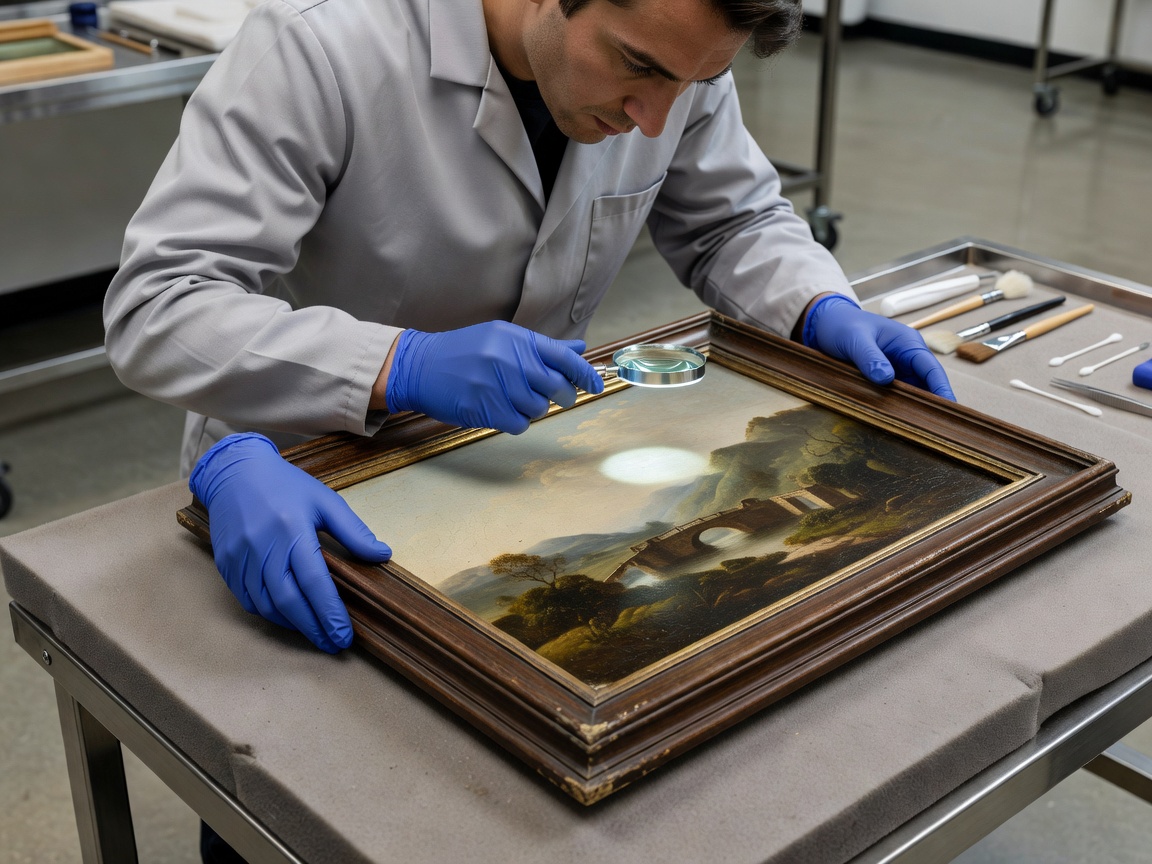
Once opened, works are placed on padded tables or easels for rigorous inspection. Condition reports are highly detailed documents that map every existing flaw—such as hairline cracks, surface abrasions, frame separation, or canvas slackness. These reports, often accompanied by high-resolution photography, protect both the collection owner and the storage provider by establishing a clear record of the object's state prior to storage.
Packing and Protective Materials
Appropriate packing isolates the artwork from its external environment. Handlers select materials based on the specific chemistry and fragility of the object.
- Nitrile and Cotton Gloves: Direct skin contact transfers oils and acids that can etch into bronze, tarnish silver, and stain paper. Handlers utilize clean, unpowdered nitrile gloves for most objects, offering better grip than cotton, which is typically reserved for specific dry media or delicate frames.
- Archival Barrier Materials: Works are never wrapped directly in commercial plastics like bubble wrap, which can trap moisture and imprint on varnish. Instead, chemically inert materials such as Tyvek, Dartek, or acid-free tissue are used as a primary barrier layer.
- Custom Crating: For travel or long-term deep storage, wooden crates are engineered with internal foam baffling. This high-density foam is carved to perfectly mirror the contours of the artwork or its frame, suspending the object and absorbing transport shocks.
Movement and Equipment
Moving heavy, awkwardly shaped, or fragile objects requires specialized equipment designed specifically for art logistics.
Standard warehouse equipment is generally insufficient. Art handlers utilize A-frame carts designed to support large canvases at an optimal angle, preventing tipping. Pallet jacks and specialized forklifts used in art facilities often feature pneumatic tires and tuned suspensions to eliminate the harsh vibrations typical of concrete warehouse floors.
Communication is the final, critical tool in the handler's arsenal. Every movement is choreographed. Lead technicians dictate the pace and route, ensuring that doorways, corners, and potential obstacles are cleared before the artwork is lifted.
Coordinating Gallery Logistics
Commercial galleries face unique handling challenges due to high inventory turnover and frequent exhibition rotations.
Explore Gallery Storage Solutions